









The fifteenth edition of EIRA took place from 20 to 27 July 2024, bringing together artists, researchers and sound practitioners through a programme of radio broadcasts, artistic residencies, conversations, performances and concerts.
This edition featured the participation of Diogo Tudela, artist and lecturer in sound studies, who was in residence at OSSO with students from the MA in New Media at the School of Arts of the Portuguese Catholic University. During EIRA, he presented a series of radio programmes developed through this residency.
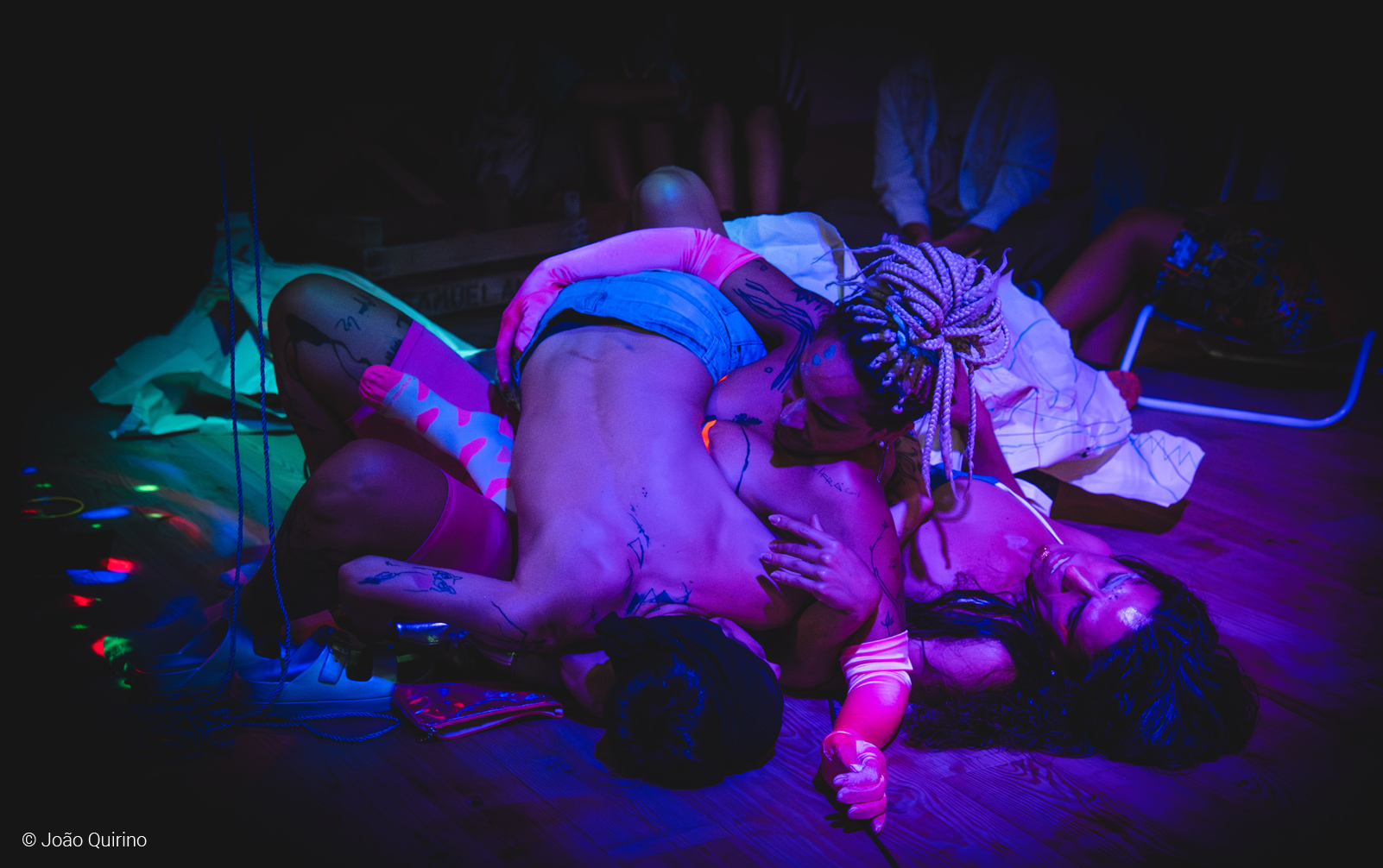
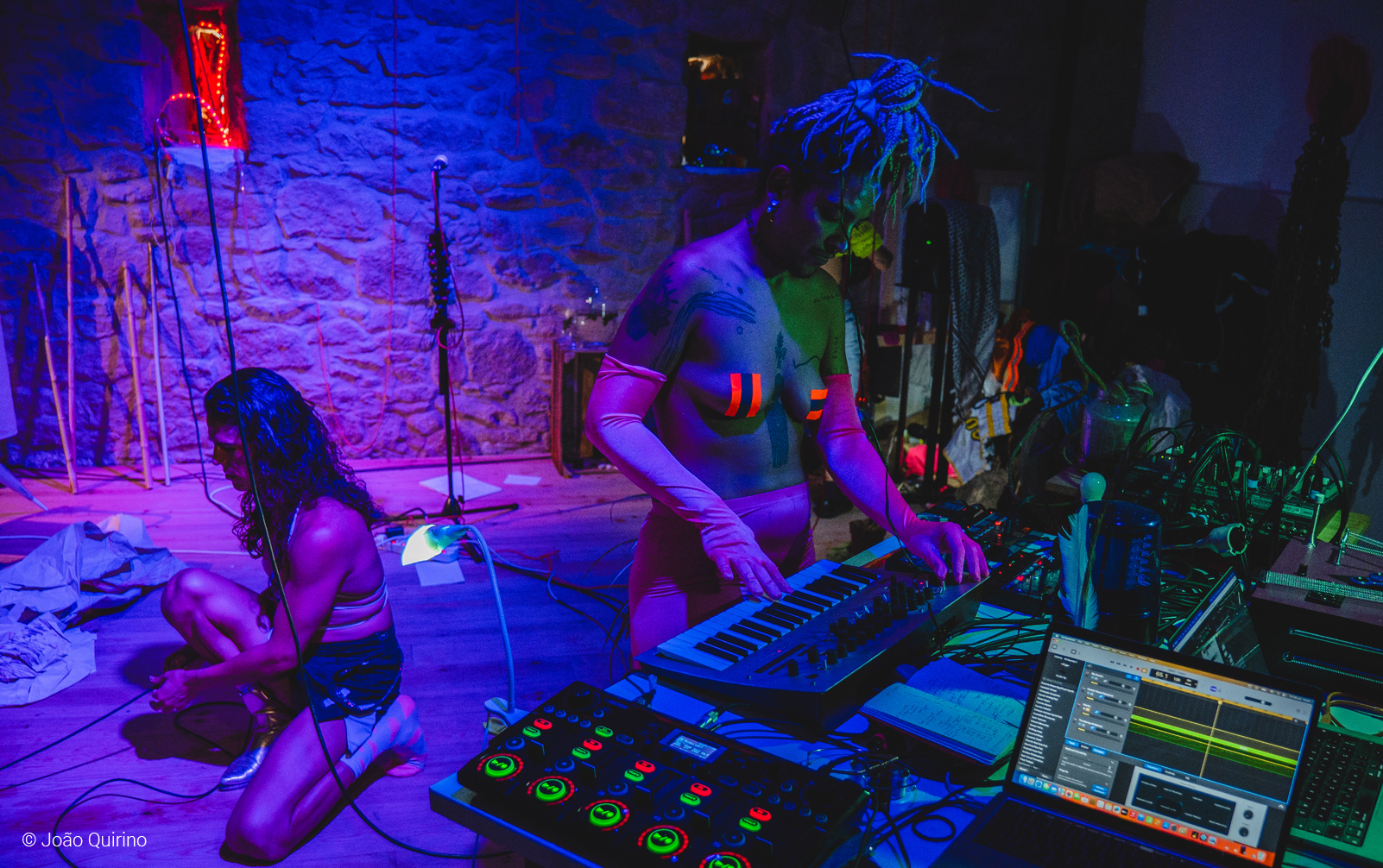
Jo Castro, who had been undertaking an extended creative residency at OSSO in the weeks leading up to the event, also presented a radio programme and shared insights into their movement-based artistic universe alongside members of their creative team.
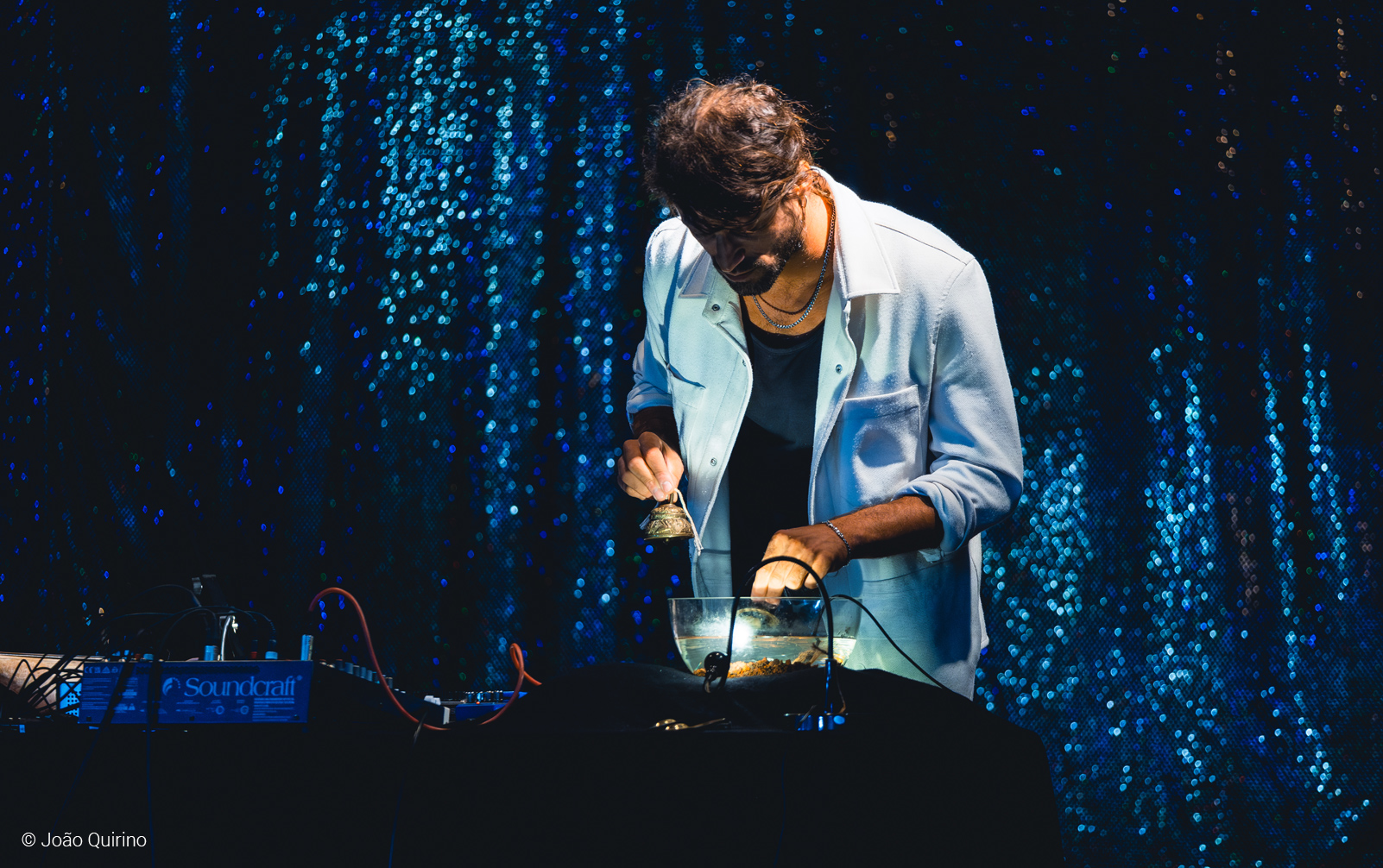
The programme further included a conversation with, and a radio contribution by, Gil Delindro, the sound artist who had been in residence at OSSO during June as part of this edition of EIRA.
The resident archive for this edition was OSSA – OSSO Sound Archive, which revisited previous editions of EIRA and other sonic projects developed within the OSSO context, offering a retrospective perspective on the organisation’s sound-based activities.
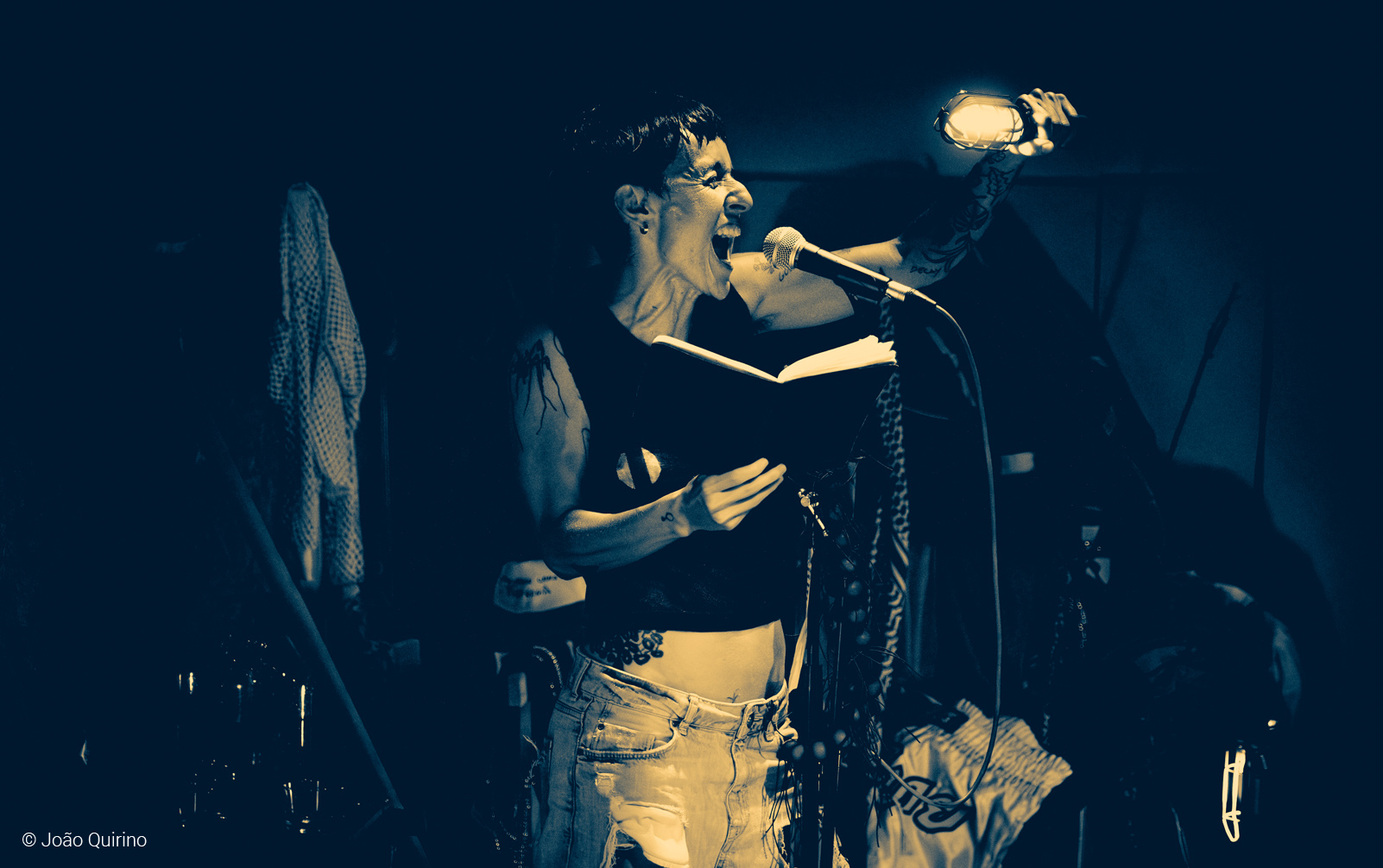
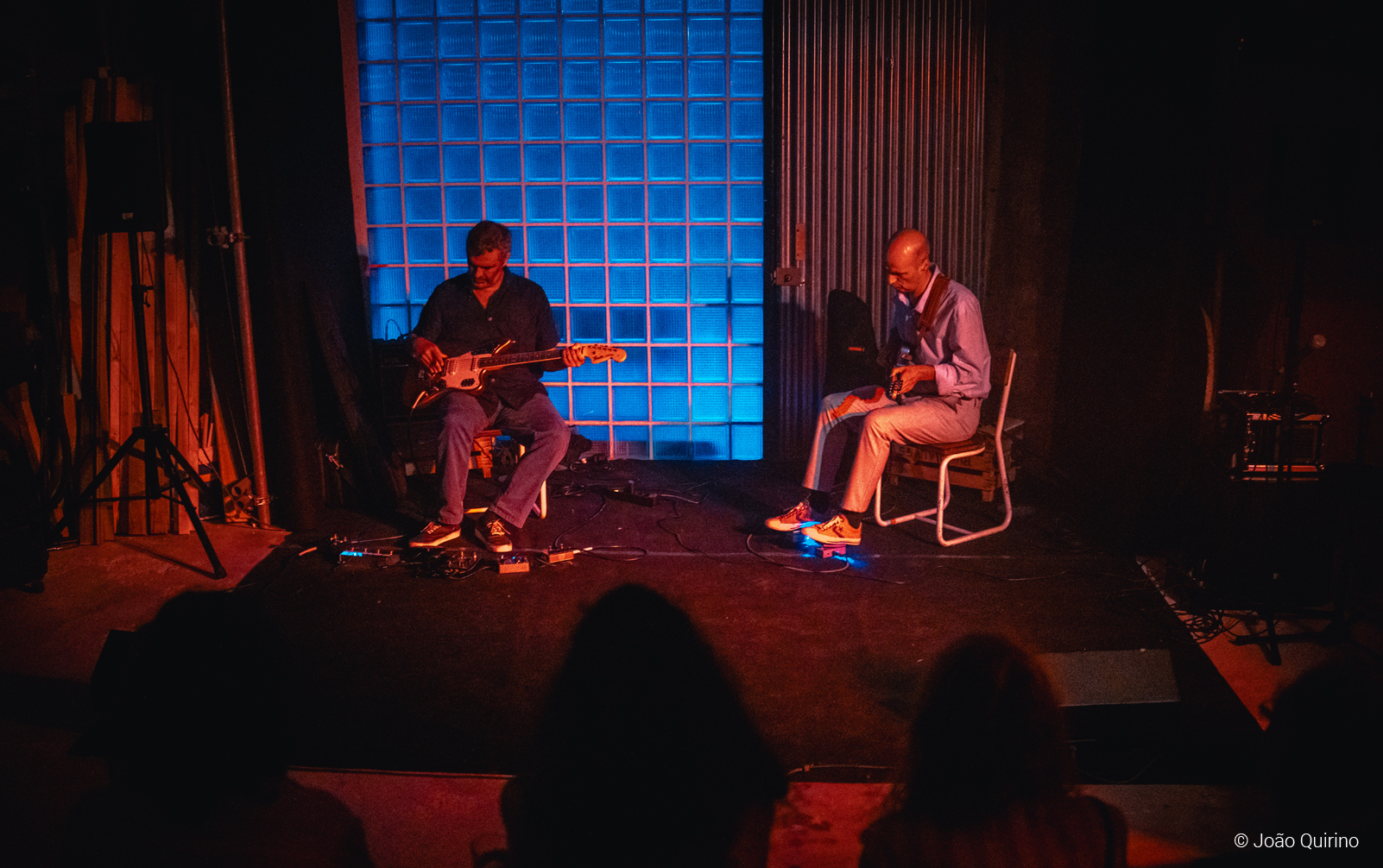
The programme concluded with two Open Days, held at OSSO and at the Salão de São Gregório. These events featured a performance by Jo Castro, concerts by David Maranha & Manuel Mota, Agressive Girls, Gil Delindro, and MEDUSA unit, the ensemble composed of Ricardo Jacinto, João Almeida, Yaw Tembe, André Hencleeday, Eleonor Picas, Álvaro Rosso and Nuno Morão.
The fifteenth edition of EIRA continued the project’s commitment to creating a platform for experimentation, dialogue and artistic exchange, connecting sound practices, research and community through both live and broadcast formats.
Participants and audiences were also invited to access the radio projects developed by the invited artists, researchers and collectives, as well as a series of recorded conversations with members of OSSO, extending the programme beyond its physical and temporal boundaries.
Gil Delindro
Gil Delindro (b. 1989, Porto) is a sound and visual artist with wide international recognition. His practice is grounded in extensive field research, with notable projects developed in the Sahara Desert (The Weight of Mountains, 2015), the Brazilian rainforest (Resiliência, 2017), rural northern Vietnam (Blind Signal, 2019), the Rhône Glacier (La Becque, 2019), the volcanoes of Auvergne (Intramuros, 2020), and Northumberland National Park (VARC, 2022).
Delindro has received awards and support from numerous international institutions, including the European Patent Office (EPO), the European Media Art Platform (EMAP), EDIGMA Media Arts Award (Portugal), the Berlin Masters Award (Germany), ENCAC – European Network for Contemporary Audiovisual Creation, Fundação Calouste Gulbenkian (Portugal), the Berlin Senate for Culture and Europe (Germany), the Goethe-Institut (Germany), OSTRALE (Germany), the STEIM Foundation (Netherlands), the Ford Foundation (Brazil, for Resiliência), the Françoise Siegfried Meier Foundation (Switzerland, for La Becque), EOFA – Embassy of Foreign Artists (Switzerland), and VARC – Visual Arts in Rural Communities (United Kingdom), among others.
His work is represented in both public and private collections and has been presented throughout North and South America, Asia and Europe.
In 2016, Delindro was selected by the SHAPE platform as one of Europe’s most innovative sound artists, leading to presentations at major international festivals including Musikprotokoll (Austria), Novas Frequências (Brazil), CYNETART (Germany), Athens Digital Arts Festival (Greece), Ars Electronica (Austria), Submerge Festival (United Kingdom), Semibreve (Portugal) and Lisboa Soa (Portugal).
His work has been released by labels including Tzadik (New York), Sonoscopia (Porto) and Ausland (Berlin), among others.
Press to listen:

OSSO Compilation by Gil Delindro
Jo Castro (1988, Porto)
A transdisciplinary non-binary artist working across dance, performance, installation, voice and sound, they have presented their work in Portugal, France, Belgium, Germany and Brazil.
Rooted in a deeply autobiographical creative universe, their practice engages with themes of death, destruction and spectrality, which permeate both their personal and artistic experience. Questions of gender are equally central to their trajectory, informing an ongoing exploration of a body that continuously deconstructs and reconstructs its own image, operating in states of in-betweenness—at the threshold of the human and beyond fixed notions of gender.
Among their most significant works in the field of dance and performance are Perto… tanto quanto possível (2014), EVERLASTING (2016), SU8MARINO (2017–18), RITE OF DECAY (2019–20), and STILL we MOVE (2021), Darktraces (2021), and D̶iar̶kti̶r̶ac̶e̶s:̶ on ghosts and spectral dances (2022).
They completed professional dance training at Balleteatro Escola Profissional (2003–2006) and attended the Choreographic Study, Research and Creation Programme at Fórum Dança, Lisbon, in 2008. In 2009, they received a scholarship from NEC, followed by a DanceWeb scholarship in 2013. They completed an audio production course at Bi-Motor in 2015 and attended the postgraduate specialisation programme in Performance at FBAUP between 2016 and 2017. They are currently undertaking professional studies in electronic music and music production at the Academia de Música do Porto.
In recent years, they have developed collaborative projects in cinema and dance film, co-directing the short film Ø ILHA (2020) with Cláudia Varejão, Darktraces (2021) with Miguel De, and the film D̶iar̶kti̶r̶ac̶e̶s:̶ on ghosts and spectral dances (2023) with João Catarino.
They are currently developing LABIA, a transdisciplinary research project of a process-based and transformative nature.
LABIA
LABIA is an autobiographical research project of an ongoing and process-based nature—one that never settles into a fixed form, but continuously transforms with every context, encounter and space it inhabits.
Taking non-binarity as an act of destabilising identity itself, LABIA proposes a meeting ground for multidisciplinary and transdisciplinary artists who move between worlds without becoming confined to established modes of practice. It is a space for coexistence and the continual re-signification of diverse forms of (res)(ex)istence.
Aligned with an intersectional transfeminist perspective, the project advocates the urgency of becoming-collective while preserving subjectivity and fostering non-hierarchical relationships between individuals. LABIA constructs a universe in which it becomes possible to move beyond individual and bodily materiality, undoing colonising and binary language systems and proposing new forms of discourse rooted in gesture, embodiment and transformation.
Through this process, language itself is expanded, opening multiple possibilities within an artistic and life-long practice that remains intentionally unfinished. Through acts of transmuting, transitioning, transpiring, transgressing and unsettling, LABIA creates new meanings and opens spaces for encounter with an aesthetic of deviating-towards-unimaginable futures—or perhaps futures that are only now becoming imaginable—offering pathways for existential expansion in the here and now.
Press to listen:
LABIA – programme-performance at the OSSO cellar I
LABIA – performance at the OSSO cellar II
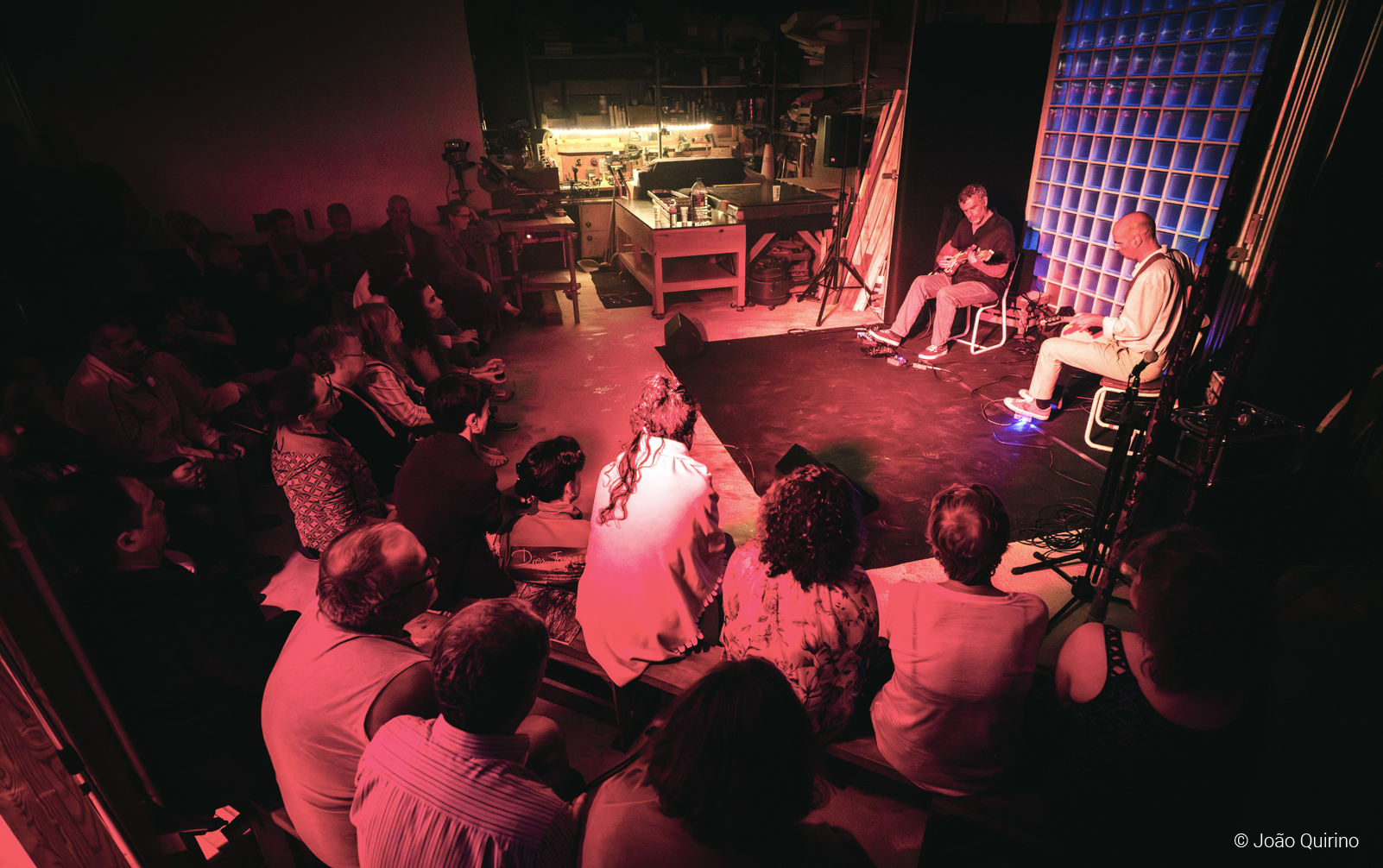
CONCERTO | 26.07.24 | Manuel Mota and David Maranha
Live music at OSSO
This concert will be broadcast on FM 89.6 MHz (São Gregório and surrounding areas) and streamed via the online player.
Manuel Mota & David Maranha
Manuel Mota – electric guitar
David Maranha – electric organ
For over 25 years, Manuel Mota and David Maranha have maintained an ongoing artistic collaboration. Working as a duo, as part of collectives such as Osso Exótico, Curia, and Dru, and alongside musicians including Chris Corsano, Richard Youngs and Z’EV, they have developed a musical trajectory rooted in experimental drone, noise and improvisation—recently evolving towards a form of electronic music that still carries the traces of their long-standing sonic path.
Manuel Mota (Lisbon, 1970)
Active as a guitarist since 1990, Manuel Mota’s work draws from a wide range of references, cultivating an enigmatic sense of timelessness. His practice has largely remained within the underground scene, a context that has shaped key aspects of his approach: reduced means, absence of ornamentation, and a strong presence of home recordings.
He founded the record label Headlights in 1998–99, through which most of his work has been released. Other labels include Room40, Blue Chopsticks / Drag City, Holidays, and Yew. He maintains long-term collaborations with Margarida Garcia and David Maranha / Osso Exótico.
David Maranha (b. 1969, Figueira da Foz)
David Maranha’s work spans music, architecture and sculpture. Since 1986, he has developed a prolific musical practice, both solo and in collaboration, releasing around 40 albums to date.
He has worked with a wide range of artists, including Chris Corsano, Richard Youngs, Z’EV, Alex Zhang Hungtai (Dirty Beaches), Phill Niblock, David Grubbs, Akio Suzuki, Will Guthrie, Andrea Belfi, Jochen Arbeit (Einstürzende Neubauten), David Thomas (Pere Ubu), Carla Bozulich, BJ Nilsen and many others.
His collaborative projects include Osso Exótico, Curia, Dru, Bowline, and Organ Eye.
Alongside music, Maranha trained in architecture at the Faculty of Architecture, Technical University of Lisbon (graduated 1993). He has since developed an architectural practice with built projects including schools, museums, hospitals and residential structures, mainly in the Sintra region.
His sculptural work began in 1993 with Montre, presented at Boqueirão da Praia da Galé, Lisbon. His work has since been shown in venues including Experimental Intermedia (New York), Wesleyan University (Connecticut), Künstlerhaus Bethanien (Berlin), and various sites across Lisbon, Porto and Brussels.
Nuno Morão (Porto, 1976)
Nuno Morão’s artistic trajectory is marked by a continuous openness to diverse musical languages, unified by experimentation and a constant drive for stylistic renewal.
Active in the underground scene since the early 1990s, he has combined artistic practice with academic study in percussion, music technology, sonology, composition and digital media. He has also taught in various higher education institutions in Portugal.
Over the past 30 years, he has participated in numerous bands and ensembles across multiple genres, collaborating with hundreds of musicians worldwide. In recent years, his work has been closely associated with Sonoscopia, the collective and association he co-founded, dedicated to sonic exploration through experimental creation and collaboration.
Press to listen:
Concert – Manuel Mota & David Maranha at OSSO Workshop Space
CONCERT | 26.07.24 | Agressive Girls
Live music at OSSO. These concerts will be broadcast on FM 89.6 MHz (São Gregório and surrounding areas) and streamed via this player.
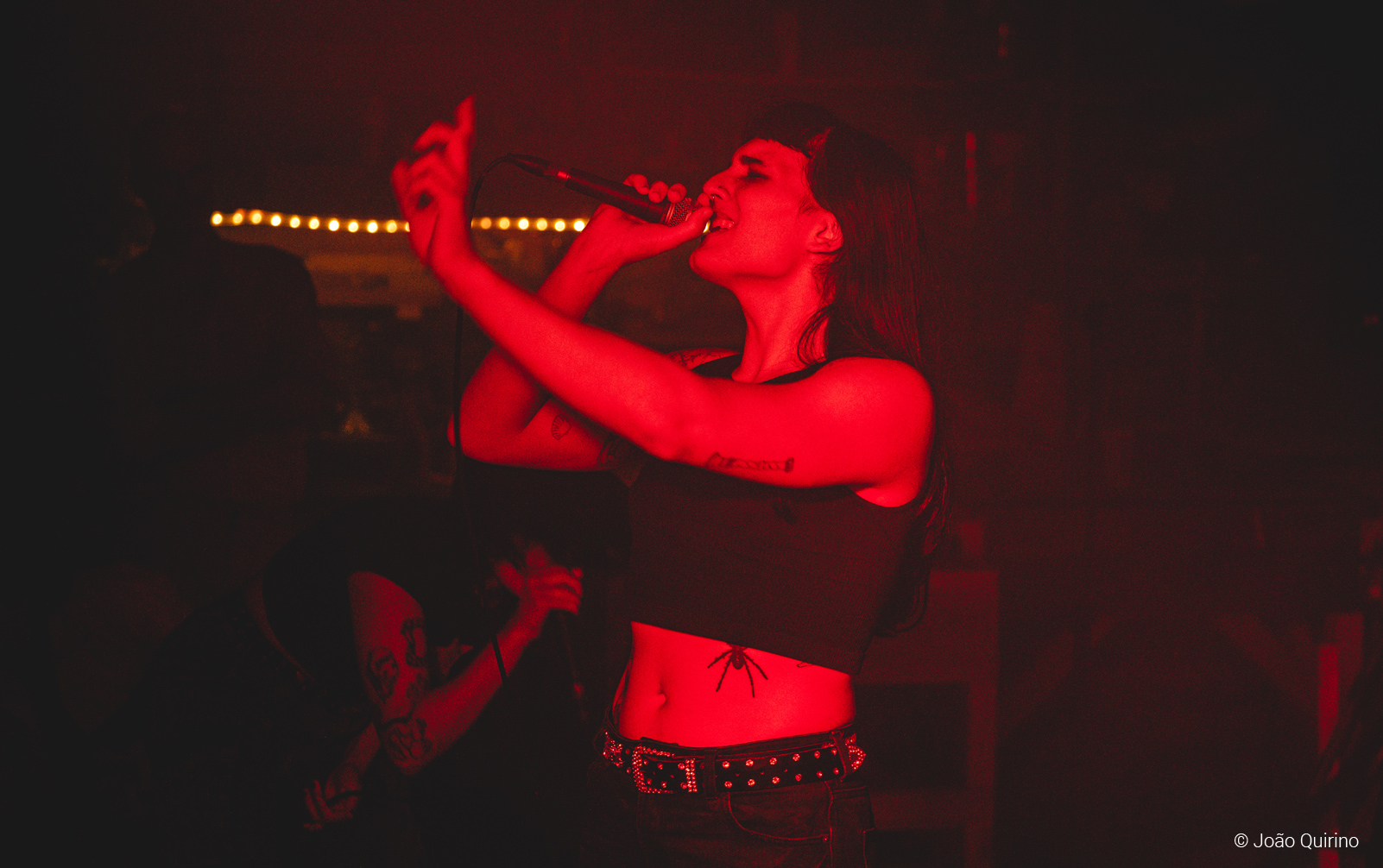
Agressive Girls, a new electronic punk band formed by Dakoi and Diana XL, release their self-titled EP in 2024. Across seven tracks, they compress a blood pact between dirty, noisy beats and raw, emotional vocals, unfolding at the intersection of lived emotional intensity and computer-made music.
They channel feelings at 200% presence, delivering a sound marked by queer lesbian rage—unbounded, fearless, and without room for compromise. Their lyrics confront frustrations with the world and those who challenge them, staging a charged entanglement between life and death that leaves them hungry for experience.
Drawing from the sonic landscapes of their teenage years, they crystallize ideals and processes of growth. Inspired by subgenres of metal, dubstep, and trap, they weave these references into a sharp, deconstructive sonic language. Having followed each other’s musical paths since their early solo careers, they now join forces to explore their post-teenage identities and musical references through a shared artistic project.
Press to listen:
Agressive Girls Concert
CONCERT | 27.07.24 | Medusa Unit
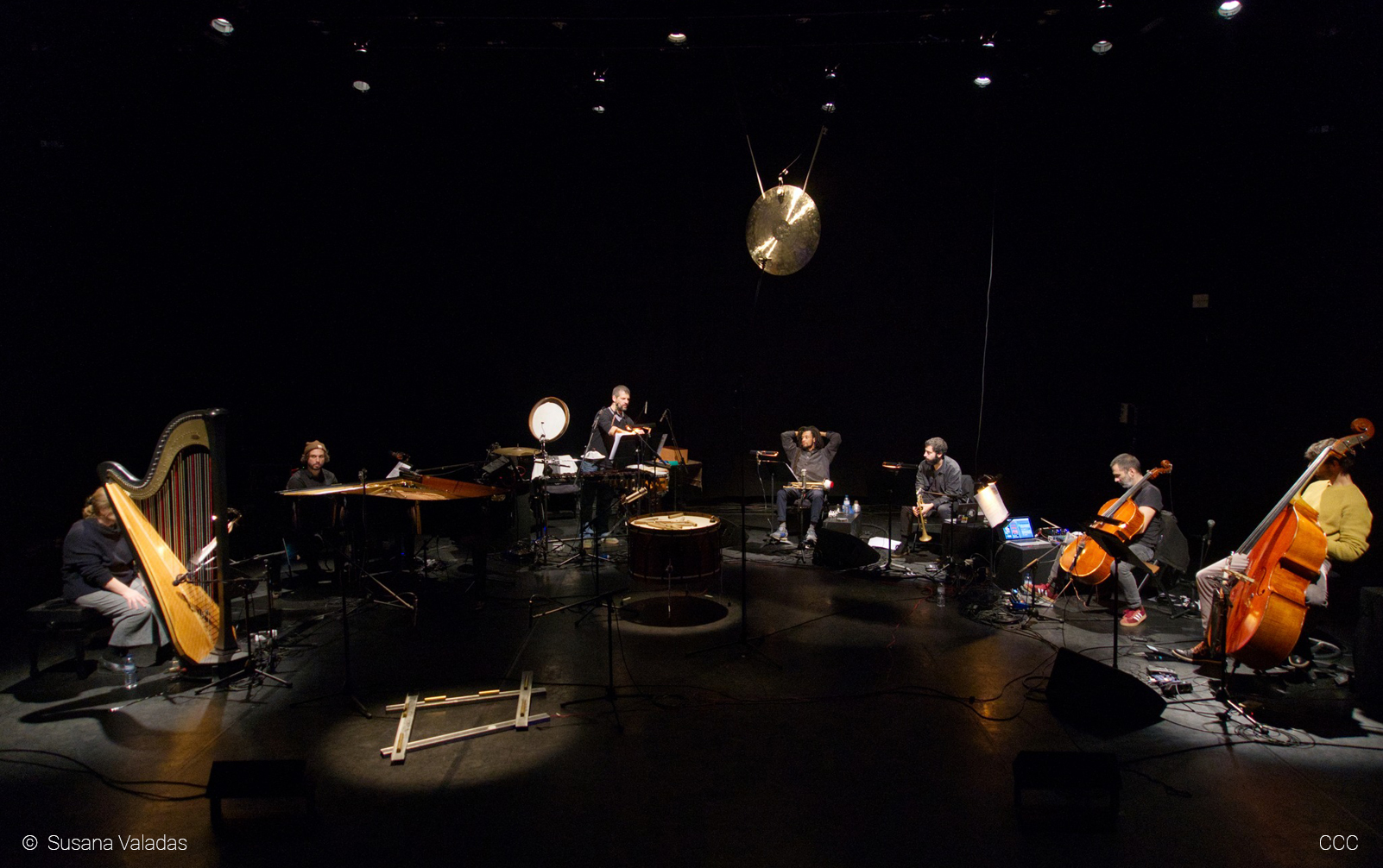
Ensemble of acoustic instruments, electronics, and resonant objects
Alvaro Rosso — double bass
André Hencleeday — organ
Eleanor Picas — harp
João Almeida — trumpet and electronics
Nuno Morão — percussion and harmonium
Ricardo Jacinto — cello and electronics, composition and direction
Yaw Tembe — trumpet and electronics
MEDUSA Unit is an ensemble that extends the solo project (for cello, electronics, and resonant objects) that Ricardo Jacinto has been developing since 2014. This project included the design of an electroacoustic device that—using an amplification system with microphones distributed across different points of the cello and a diffusion system with multiple contact loudspeakers attached to resonant objects—enabled the exploration of sonic fragmentation and dispersion across the instrument’s body. It articulates a microscopic listening of the cello with soundscape and the acoustic properties of the surrounding space.
With a flexible formation composed of improviser-performers, the unit continues the core premises of the original project while expanding into the hybridization of multiple acoustic instruments through an electroacoustic system of resonant interaction, where signal interference and feedback networks form the basis of a music that engages with the specific characteristics of performance spaces, resulting in a strongly textural sound world rooted in minimalism and spectralism.
Press to listen:
Medusa Unit Concert at Salão São Gregório Ginásio Clube
Mestrado UCP | Diogo Tudela
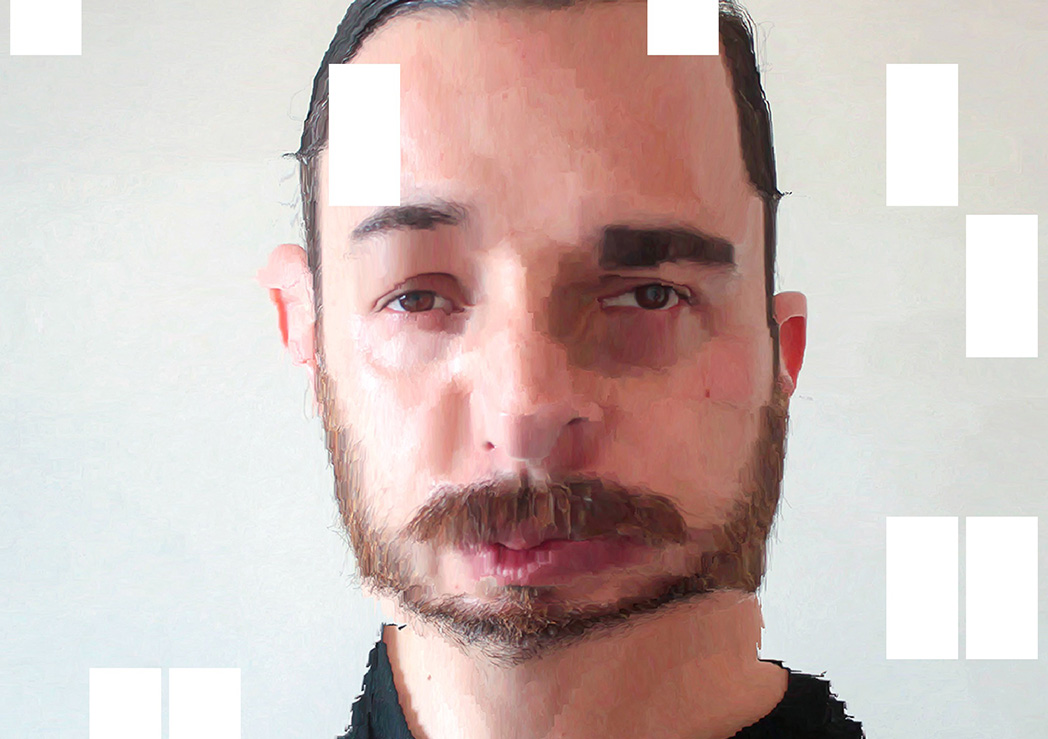
Diogo Tudela (Porto, 1987) is a programmer and maker working at the intersection of syntactic systems, formal languages, and allographic representations.
He holds a BA in Sound and Image (2009) and an MA in Digital Arts (2011), both from the School of Arts of the Catholic University of Portugal, where he later interned as a researcher at CITAR — the Research Centre for Science and Technology of the Arts. He also taught Typography and Communication Design in the university’s Postgraduate Programme in Digital Design between 2012 and 2014.
He currently teaches in the Multimedia Art degree at ISMAI, in the Postgraduate Programme in Printmaking at FBAUP, and in the Fine Arts and Intermedia programme at ESAP.
In 2015, he was a finalist for the Novo Banco Revelation Prize at the Serralves Foundation, and selected for the official programme of the BAFTA-qualifying ASFF. In 2017, he presented the work “Solar Paramétrica” at CAAA, Guimarães, supported by a grant from the Calouste Gulbenkian Foundation.
Press to listen:
During the intervals between talks and concerts, the OSSO Sound Archive will be broadcast. OSSA includes sonic donations from members of the collective and EIRA residents, presenting itself as the immaterial trace of our sonic affinities.